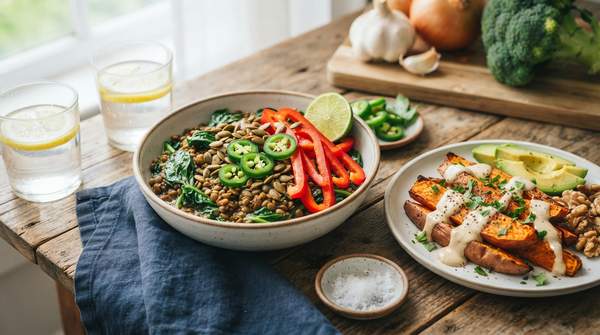
Plant-based meals can deliver plenty of iron, zinc and vitamins — but only if your body actually absorbs them. The central strategy is pairing: vitamin C alongside iron-rich plants, sulfur compounds like onions and garlic with zinc sources such as chickpeas, and healthy fats with fat-soluble vitamins and antioxidants. A systematic review of nutrient intake in adults consuming plant-based diets notes that micronutrients including iron and zinc are either found mainly in animal foods or have lower bioavailability in plants, which is exactly why these pairings matter.
Understanding Nutrient Absorption Challenges in Plant-Based Diets
The key concept is bioavailability: how much of a nutrient in your food actually makes it into your bloodstream. Plant foods often contain less bioavailable forms of minerals, and their absorption can be further reduced by compounds naturally present in the plants themselves, such as phytates, which bind minerals and inhibit zinc absorption.
Iron is the clearest example. Plant sources provide non-heme iron, which is more sensitive than animal-derived heme iron to what else is on the plate. As guidance from the American College of Lifestyle Medicine explains, iron absorption varies with each meal's composition, the overall diet, and your individual iron status — when the body's iron stores are low, absorption from food rises, and vice versa. Meat and vitamin C enhance absorption, while calcium and the milk protein casein may inhibit it.
Key Nutrient Pairings for Enhanced Absorption
Once you know the inhibitors, the pairings follow logically: each one matches a nutrient with a food that either neutralizes the inhibitor or supplies the chemistry the nutrient needs. Vitamin C is a potent enhancer of non-heme iron; sulfur compounds improve zinc uptake; dietary fat is required for vitamins A, D, E and K and for antioxidant carotenoids like lycopene. The table below gathers these pairings into a quick-reference framework.
Iron Absorption: The Vitamin C Connection
Iron from plants needs an escort, and vitamin C is the most reliable one. Research summarized in a review of plant-based dietary interventions describes ascorbic acid as a potent enhancer of non-heme iron absorption, with intervention studies that combined vitamin C–rich products with iron sources showing improved iron status in young women. Other reviews of supplementation similarly conclude that vitamin C taken with iron markedly enhances non-heme absorption.
In practice, this means pairing foods like leafy greens and lentils with vitamin C sources such as lemons and tomatoes. A squeeze of lemon over a lentil dish or a tomato-based sauce with beans accomplishes the pairing in a single meal — the same meal, since absorption is modulated meal by meal, not averaged across the day. On the flip side, dairy alongside an iron-rich plant meal can blunt absorption through its calcium and casein.