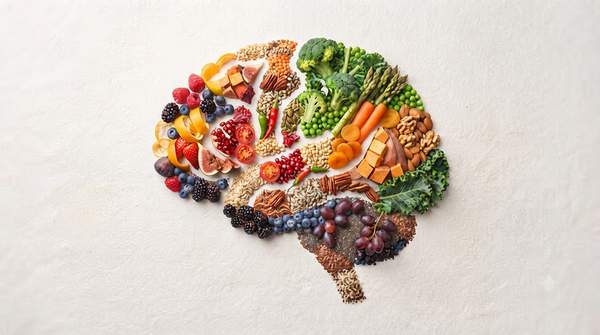
Yes — specific plant compounds, including flavonoids, carotenoids, and polyphenols such as curcumin and resveratrol, are associated with measurable support for brain health, primarily by reducing oxidative stress and calming inflammation in the brain. A review published in Frontiers in 2025 maps these compounds to benefits ranging from improved memory and learning to mood support, and other scientific reviews identify berries, leafy greens, turmeric, and green tea as especially rich sources. Here is how these compounds work, what the evidence does and does not yet show, and how to translate the science onto your plate.
Introduction to Phytonutrients and Brain Health
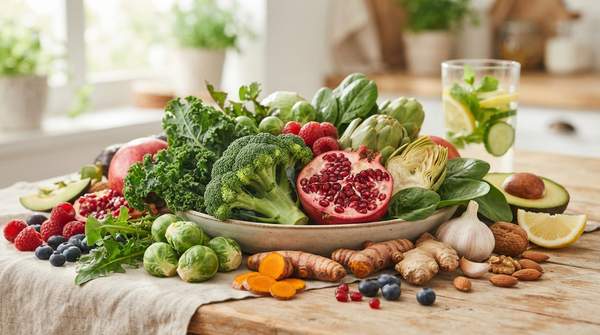
Phytonutrients, also called phytochemicals, are compounds that plants produce — often the same pigments and defenses that give fruits and vegetables their color. The practical shorthand for capturing them in your diet is what clinicians call "eating a rainbow": consuming a wide variety of colorful fruits, vegetables, and other plant foods, each color group carrying its own distinct set of bioactive compounds. Writing in MedLink Neurology, the authors note that such a plant-rich, many-colored diet has been linked to brain benefits by reducing oxidative stress and inflammation and by improving synaptic plasticity — the brain's capacity to strengthen and reorganize the connections between neurons, which underlies learning and memory. Different colors signal different chemistry, which is why variety, not any single "superfood," is the organizing principle of a brain-supportive plant intake.
Mechanism 1: Reducing Oxidative Stress
The brain is unusually vulnerable to oxidative damage: it consumes a great deal of oxygen and contains lipid-rich tissue that can degrade when reactive molecules accumulate faster than the body can neutralize them. Antioxidant phytonutrients act as this neutralizing defense. A review of phytonutrients in brain disorders, authored by Krishnendu Adhikary and colleagues and published in Frontiers in 2025, describes how flavonoids from berries, citrus fruits, and dark chocolate exert antioxidant effects that protect brain cells from oxidative stress, improve cognitive function, and promote neuroplasticity.
Some compounds work through specific molecular switches. The same review notes that quercetin — found in apples, onions, and berries — activates a pathway called Nrf2, which coordinates the cell's own antioxidant response, while other compounds, such as the ginsenosides in ginseng, combine antioxidant activity with protection of mitochondria, the energy-producing structures that power neurons. Carotenoids, the orange-red pigments in carrots, spinach, kale, and tomatoes, are likewise described as antioxidants that support cognitive function, particularly in the aging brain. The common thread is straightforward: these compounds help keep the balance between oxidative damage and repair tilted in the brain's favor.
Mechanism 2: Combating Neuroinflammation
The second core mechanism is anti-inflammatory. When the brain's immune cells — microglia — stay chronically activated, they release inflammatory signals that can interfere with normal neuronal function over time. Several phytonutrients appear to dampen this response. The Frontiers review describes luteolin, found in celery, parsley, and green peppers, as inhibiting microglial activation and suppressing the NF-κB pathway, a central regulatory route in inflammation. Curcumin, the bright yellow compound in turmeric, is likewise characterized as anti-inflammatory in the same review and in the phytonutrient table compiled in the PMC-published review, which links curcumin's inhibition of NF-κB to its studied role in Alzheimer's disease and depression.
Flavonoids add a third dimension: beyond calming inflammation, they appear to actively support the brain's wiring. As summarized in a review published in ScienceDirect's Biomedicine & Pharmacotherapy, flavonoids have been implicated in neuronal proliferation and survival by acting on cellular signaling cascades such as the ERK/CREB/BDNF and PI3K/Akt pathways, and they promote long-term potentiation in the hippocampus — the electrophysiological signature of memory formation. That combination of protection and support, rather than either one alone, is what defines a compound as neuroprotective.
Phytonutrients for Brain Health: A Quick Reference Guide
The table below synthesizes the evidence from these scientific reviews into a single reference. Use it to match a cognitive goal — memory, mood, protection of aging brain function — to the compounds and everyday foods most associated with it in the research. The final column distinguishes where the evidence sits: several compounds have both preclinical and clinical support, while others remain largely preclinical, meaning the benefits have mainly been demonstrated in cells and animals rather than in human trials.
| Phytonutrient class / compound | Primary mechanisms | Key food sources | Associated cognitive benefit | Evidence base |
|---|---|---|---|---|
| Flavonoids (including anthocyanins) | Antioxidant; anti-inflammatory; support neuronal signaling (ERK/CREB/BDNF, PI3K/Akt pathways); promote long-term potentiation | Berries (blueberries, blackberries, cherries), citrus fruits, dark chocolate | Improved memory formation and learning; neuroplasticity; studied for Alzheimer's-type symptoms and cognitive decline | Preclinical and clinical |
| Carotenoids | Antioxidant | Carrots, spinach, kale, tomatoes | Cognitive support, particularly in the aging brain | Preclinical and clinical |
| Polyphenols — curcumin | Anti-inflammatory (NF-κB inhibition); antioxidant; inhibits amyloid-beta aggregation; modulates neurotransmitters | Turmeric | Mood and cognitive function; studied in Alzheimer's disease and depression | Preclinical and clinical |
| Polyphenols — resveratrol | Antioxidant; anti-inflammatory; SIRT1 activation; mitochondrial protection | Grapes, berries, red wine | Studied in Parkinson's disease, stroke, and Alzheimer's disease | Preclinical and clinical |
| Polyphenols — EGCG (green tea catechin) | Antioxidant; modulates neurotransmitters; stimulates neurogenesis | Green tea | Studied in Alzheimer's disease, anxiety, and stroke | Preclinical and clinical |
| Flavonoid — quercetin | Antioxidant (Nrf2 activation); anti-inflammatory; protection against excitotoxicity | Apples, onions, berries | Studied in epilepsy and Alzheimer's disease | Preclinical |
| Flavonoid — kaempferol | Antioxidant; anti-inflammatory; mitochondrial protection | Kale, broccoli, tea | Studied in Parkinson's disease and depression | Preclinical |
| Ginsenosides | PI3K/Akt activation; antioxidant; anti-apoptotic; neurogenesis | Ginseng | Studied in stroke, Alzheimer's disease, and depression | Preclinical and clinical |
Polyphenols from green tea, coffee, grapes, and berries are described more broadly in the Frontiers review as enhancing memory, learning, and focus by improving blood flow to the brain and stimulating neurogenesis — the generation of new neurons. Note that individual compounds vary widely in how well the body absorbs them, a challenge the PMC review explicitly flags as a continuing obstacle to translating laboratory findings into dietary recommendations.
Incorporating Neuroprotective Foods into Your Diet
Translating this table into meals is simpler than it may look, because the foods cluster by color and category. A brain-supportive week might include berries at breakfast, a salad built from dark leafy greens like kale and spinach with carrots and tomatoes, an apple or onion-rich soup for quercetin, and a turmeric-spiced dish at dinner, perhaps paired with a cup of green tea. The MedLink guidance frames the goal as spanning the color spectrum over time rather than perfecting any single day — what matters is regular, varied intake of plant foods so that flavonoids, carotenoids, and other polyphenols accumulate across different mechanisms: antioxidant defense from the berries and greens, anti-inflammatory action from the turmeric and tea, and vascular and neurogenesis support from the grapes and polyphenol-rich beverages.
Important Considerations for Dietary Phytonutrients
Two caveats deserve honest weight. First, this article is for informational purposes only and is not medical advice; anyone managing a neurological or psychiatric condition should work with a clinician. Second, the evidence base is uneven. Many of the most-studied compounds — curcumin, resveratrol, EGCG, anthocyanins, ginsenosides — have both preclinical and some clinical support, but others on the list, including quercetin, kaempferol, luteolin, and apigenin, remain largely preclinical, so their benefits have not yet been confirmed in controlled human trials. This article deliberately focuses on dietary sources rather than supplements, where dosing, absorption, and interactions differ substantially from whole foods. The phytonutrient reviews also note that bioavailability — how much of a compound actually reaches the brain after digestion — remains a significant open question, which is another reason not to overstate the certainty of any single compound's effect.
Making Informed Dietary Choices for Brain Health
The decision this evidence supports is to incorporate a diverse range of plant-based foods rich in phytonutrients into your daily diet to support cognitive function and neuroprotection — favoring variety across colors and compound classes over reliance on any one ingredient. The measurable indicator of progress is increased consumption of colorful fruits, vegetables, and other plant foods as part of a balanced diet. A practical way to check yourself: aim for your shopping cart and plate to span the pigments named in the research — the purples and blues of berries, the orange of carrots, the deep greens of kale and spinach, and the yellow of turmeric — so that each week includes foods from the flavonoid, carotenoid, and polyphenol families that reviews published in 2025 associate with reduced oxidative stress, calmer neuroinflammation, and better-supported memory and learning.