Microplastics are in your food, your water, and almost certainly your body. One widely cited estimate, based on 26 studies and roughly 15 percent of Americans' caloric intake, puts consumption at 39,000 to 52,000 microplastic particles per year for the US population, varying by age and gender. What that exposure means for your health is a far harder question. Laboratory and animal studies point to plausible mechanisms of harm—inflammation, chemical leaching, endocrine disruption—but no study has yet determined the direct dangers of microplastics in humans, and regulators say current science cannot support a formal risk assessment. Here is how the particles get to you, what they might do once inside, and where the evidence genuinely ends.
How Microplastics Enter Our Food and Water
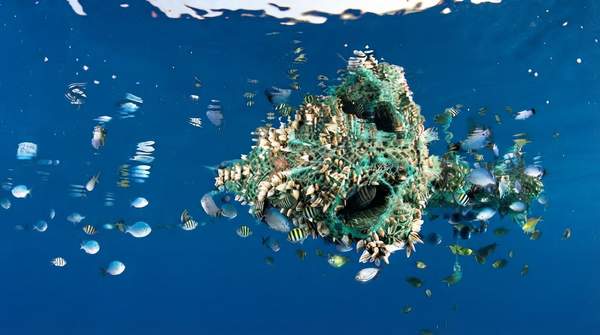
The journey begins with plastic waste breaking down in the environment. As Woods Hole Oceanographic Institution describes it, plastics that reach the ocean degrade into microplastics that are ingested by fish and shellfish, and those particles can then move up the food chain to humans. Seafood is therefore one of the best-documented vectors, but it is far from the only one.
Drinking water is another major route. Studies have measured microplastic concentrations in both tap and bottled water, and the US intake estimate above drew on bottled water, tap water, salt, sugar, honey, alcohol, and seafood. A review of food supply contamination notes that researchers have also detected microplastics in beer, honey, salt, and mineral water. In other words, the particles are not confined to one food category—they appear across the pantry.
A scientific review of the human food chain published in the Journal of Pesticide Sciences and related literature reports detection of microplastics in seafood, drinking water, fruits, vegetables, cereals, dairy products, meat, and processed foods, calling food contamination a major public health issue. The same review flags an often-overlooked complication: besides the particles themselves, microplastics may carry plastic additives, heavy metals, persistent organic pollutants, and pathogenic microorganisms. That means the contamination question is not only about plastic, but about everything plastic can transport. Food packaging and processing are also identified as points where plastic can transfer into food before it ever reaches your kitchen.
Microplastic Journey: From Environment to Plate
Tracing the pathway step by step helps make sense of where dietary exposure actually comes from. The sequence below synthesizes the documented routes from environmental release to ingestion, so you can identify the most significant food-related pathways based on current findings.
- Environmental release: Plastic waste degrades in oceans and other environments, fragmenting into microplastics and smaller nanoplastics.
- Contamination of water and soil: Particles enter the water column and soils. While larger microplastics are not taken up by most plants and soil organisms, a review in the journal Toxics notes that small particles such as nanoplastics can be taken into cells, generating environmental risk for crops and soil life.
- Uptake by marine life: Fish and shellfish ingest microplastics directly, making seafood a recognized pathway for particle transfer up the food chain.
- Contamination of other foods: Microplastics have been measured in salt, sugar, honey, beer, fruits, vegetables, cereals, dairy, meat, and processed foods—contamination that spans nearly every food category.
- Water sources: Both tap and bottled water carry measurable microplastic concentrations, contributing to daily intake.
- Packaging and processing: Plastic packaging and food processing practices can transfer particles into food before purchase, which is why improving packaging practices is cited as a public health priority.
- Human ingestion: Contaminated food and water deliver particles into the body; one estimate puts US intake at 39,000 to 52,000 particles per year depending on age and gender, based on a partial assessment of the diet.
Two features of this pathway matter for interpretation. First, the estimate above covers only about 15 percent of caloric intake, so total dietary exposure is likely higher. Second, the particles you ingest are not uniform—shape and size matter, with some studies suggesting fibers are more toxic to marine invertebrates than fragments or spheres of the same polymer.
Potential Biological Mechanisms of Harm
Once inside the body, how could microplastics cause trouble? Researchers describe two broad categories of potential harm, and pediatrician and environmental health researcher Leonardo Trasande, speaking with Inside Climate News, summarized them plainly: microplastics "may deliver chemicals of concern to human tissue, or they themselves can be human wrecking balls, or otherwise cause inflammation by just their interaction and physical properties."
The first category is physical. Experimental studies indicate that particles can cause physical damage, oxidative stress, and inflammation in biological systems, with chronic exposure of particular concern. The second category is chemical. Microplastics can leach plastic additives and can act as vectors that adsorb and carry other pollutants—heavy metals and persistent organic contaminants—which complicates any food safety risk assessment because the hazard is not just the plastic itself.
A third, related concern is endocrine disruption. Studies reviewed in the food supply literature report endocrine disruption in adult freshwater fish that ingested polyethylene, altered gene expression in male fish exposed to plastic, and reproductive effects in marine animals exposed to polystyrene microplastics. These are animal findings, not human ones, but they establish that the mechanisms are biologically plausible and worth investigating in people.
Current Scientific Certainty: Animal vs. Human Evidence
This is where careful readers should slow down. The evidence for harm comes overwhelmingly from experimental settings—cell studies, marine invertebrates, fish—while direct human evidence remains thin. The food supply review states it directly: there is still a knowledge gap regarding the specific threats, toxicities, and adverse health effects in humans from ingesting microplastic-contaminated food.
Stanford Medicine's overview of the science is similarly candid. Researchers have not yet determined how long microplastics remain in the body, how their effects are influenced by genetics, environment, or other factors, or if certain plastics or exposure types pose greater risks. Stanford infectious disease researcher Desiree LaBeaud explained the core problem: "Because plastic is so ubiquitous, it's difficult to have a lot of evidence that's causal. It's not like we're going to have randomized control trials where people aren't exposed."
So the honest scorecard looks like this: widespread human exposure is well documented; biological mechanisms of harm are plausible and demonstrated in animals; specific health outcomes in humans are not yet established. Some researchers, including those quoted in recent coverage, believe emerging studies are beginning to unravel mechanisms that could explain associations between microplastics and major human health conditions—but association and established causation are different things, and the science has not crossed that line.
Limitations and Uncertainties in Research
Why is the human evidence so limited? The US Food and Drug Administration, which monitors microplastics in foods, identifies the obstacles concretely. In its own words, "the current state of science is limited in its ability to inform regulatory risk assessment," because of a continued lack of standardized definitions, reference materials, sample collection and preparation procedures, and appropriate quality controls.
Nanoplastics are an even bigger blind spot. The FDA notes there have been fewer studies on them because available scientific measurement methods are not very reliable at detecting polymer particles that small. And plastics themselves vary enormously in characteristics and applications, which creates difficulties in assessing their potential toxicity and impact on human health. In short, researchers cannot yet consistently measure what people are exposed to, let alone agree on how to test what it does.
These are real, structural limitations—not a sign that microplastics are harmless. As one food safety analysis puts it, the risk associated with ingesting microplastics is a function of both hazard and exposure, and the field is still working to characterize each side of that equation. This article cannot quantify your personal risk, and the current evidence base does not support doing so for anyone.
Navigating Uncertainty: What We Know and Don't Know
Readers should understand that while microplastic exposure through diet is widespread, the specific long-term human health consequences are still under active scientific investigation, with current evidence primarily from experimental studies. That is the decision-relevant takeaway: you can reasonably treat dietary microplastic exposure as a real, measurable phenomenon worth attention, while treating confident claims about specific human diseases as ahead of the evidence.
What you can watch for is concrete: continued scientific research and regulatory updates on microplastic health effects and exposure thresholds. The FDA's stated need for standardized definitions and measurement methods is a checklist you can track—when regulators announce standardized reference materials or a formal risk assessment framework, that will mark the shift from plausible concern to quantifiable risk. Until then, the most defensible position is calibrated caution, not alarm.
Sources
- Microplastics in the Environment: Intake through the Food Web, Human Exposure and Toxicological Effects - PMC
- Microplastics and Nanoplastics in Foods — U.S. Food and Drug Administration
- Microplastics in the Food Chain illustration — Woods Hole Oceanographic Institution
- Microplastic Contamination of the Food Supply Chain — FOOD SAFETY
- Microplastics in the Human Food Chain — Jpmsonline
- Microplastics in the Food Chain - PMC
- Microplastics and our health: What the science says — News Center