Your liver detoxifies harmful substances through a two-step biochemical process, and specific plant compounds—silymarin from milk thistle, flavonoids like quercetin and luteolin, and ellagic acid—help modulate the enzymes running those steps. Understanding the two phases explains why researchers increasingly favor varied whole foods over isolated, high-dose supplements: each phase depends on different enzymatic machinery, and no single compound supports both optimally.
The Two Phases of Liver Detoxification
The liver's detoxification work is conventionally described in two sequential phases. In Phase I, a family of enzymes—most prominently the cytochrome P450 (CYP450) enzymes—chemically transforms fat-soluble compounds so they can be processed further. This transformation makes toxins more reactive, not less.
That reactivity is the crucial point. Phase I produces intermediate byproducts that can be more chemically aggressive than the original substances, including free radicals that burden the cell. Left unprocessed, these intermediates can damage liver tissue.
Phase II, known as conjugation, is where the liver finishes the job. Enzymes such as glutathione S-transferases (GSTs) and UDP-glucuronosyltransferases (UGTs) attach small carrier molecules to the Phase I byproducts. This conjugation converts them into water-soluble forms the body can excrete through bile or urine. Both phases must therefore stay in balance: Phase I without adequate Phase II activity leaves reactive intermediates lingering, while well-supported Phase II enzymes help clear them safely.
Key Plant Compounds and Their Role in Detoxification
Among botanicals studied for liver support, milk thistle has the longest-standing reputation. Its seeds contain a group of flavonoid compounds collectively known as silymarin, which formulators frequently include in products designed to support detoxification pathways. According to ingredient supplier Intermountain Nutrition's overview of botanicals for liver and detox formulations, silymarin's association with liver support rests on its antioxidant defense and cellular protection properties—mechanisms that fit naturally into the two-phase model, since antioxidant activity helps counteract the reactive byproducts Phase I generates.
Flavonoids more broadly show a two-sided influence on detoxification enzymes. A scientific review of foods and food-derived components published in the National Library of Medicine's journal collection notes that individual flavonoids can inhibit CYP450 enzymes—slowing specific Phase I reactions—or induce Phase II enzymes such as GSTs and UGTs, accelerating conjugation. The review also documents specific dosages used in research, such as luteolin at 40 mg/kg three times per week in in vivo studies, and quercetin at 50 mg/kg per day. The practical takeaway is that "flavonoids" are not interchangeable: the specific compound determines whether the effect lands on Phase I or Phase II.
Ellagic acid offers a different, complementary mechanism. Writing in the journal Molecules, researchers describe how ellagic acid's structure—with four hydroxyl groups—is responsible for high antioxidant activity, observed in both in vitro and in vivo studies. Some scientists cited in that paper have suggested it may be a more effective antioxidant than vitamin E, a standard reference compound for combating oxidative stress and lipid peroxidation. This radical-scavenging capacity matters because oxidative stress is precisely the collateral damage an imbalanced Phase I produces.
Quercetin, one of the most ubiquitous dietary flavonoids, has human trial evidence behind it. A 2024 review in Frontiers in Pharmacology by Fei Xiong and colleagues reports that a randomized, placebo-controlled trial among Japanese subjects suggested improvements in liver function with quercetin-rich onion consumption, and that a phase I study indicated quercetin's safety and potential antiviral activity in chronic hepatitis C patients.
Plant Compounds for Liver Detoxification: A Quick Guide
The table below classifies each compound by its primary mechanism in the detoxification pathway and maps it to the foods that supply it, so you can trace a food choice directly to its biochemical role.
| Plant Compound | Detoxification Role/Mechanism | Primary Food Sources |
|---|---|---|
| Silymarin (a flavonoid complex) | Antioxidant defense and cellular protection supporting liver function; associated with influencing detoxification pathways | Milk thistle (seed) |
| Flavonoids (e.g., quercetin, luteolin) | Some inhibit Phase I CYP450 enzymes; others induce Phase II enzymes such as GSTs and UGTs; effects vary by compound | Onions (quercetin); a wide variety of plant foods |
| Quercetin | Flavonoid linked in a human trial to improved liver function markers with onion consumption | Onions and other quercetin-rich vegetables and fruits |
| Ellagic acid | High antioxidant and free-radical-scavenging activity, attributed to its four-hydroxyl-group structure, seen in in vitro and in vivo studies | Berries and pomegranate |
Note that this guide focuses on plant compounds specifically. Amino acids, vitamins, and minerals also participate in Phase II conjugation, but they fall outside the scope of this comparison. This table also stops short of medical claims: none of these compounds has been shown to reverse damage from alcohol, drugs, or established liver disease.
Food Sources for Liver-Supporting Plant Compounds
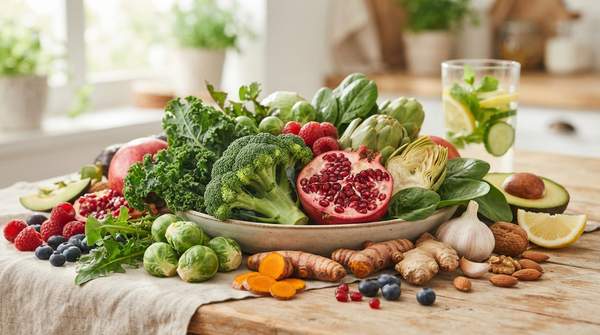
Translating the science into meals is straightforward. Onions are the standout quercetin source—the Japanese trial cited in the Frontiers in Pharmacology review used quercetin-rich onion consumption as its intervention, and quercetin is described in that review as a polyphenolic flavonoid found ubiquitously in a variety of foods. Berries and pomegranate deliver ellagic acid, whose antioxidant activity has been observed in both cell-based and animal studies. Milk thistle, meanwhile, is consumed primarily as a seed extract or tea rather than a food, and its silymarin content is the reason it remains a foundational botanical ingredient.
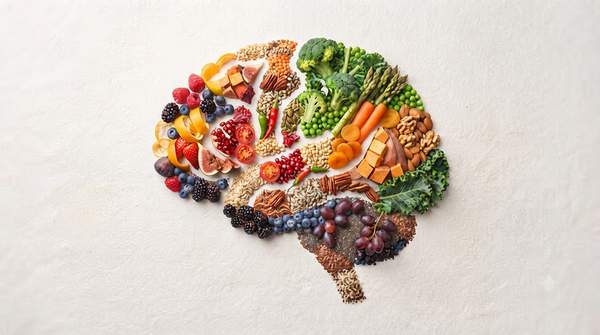
The mechanistic variety here is the point. A diet that includes alliums, berries, pomegranate, and a broad range of other plants supplies compounds acting at different points in the pathway: some tempering Phase I activity, some accelerating Phase II conjugation, some simply mopping up the free radicals the process inevitably creates.
Why Whole Foods Beat Single-Compound Supplements
The scientific review of food-based detoxification modulation makes this argument directly. Various studies, it notes, point to the advantageous effects of whole foods and food combinations versus specific isolated bioactive compounds. The review cites Zhou and colleagues (2014), who showed that organosulfur compounds are not the only Nrf2-enhancing bioactive compounds in garlic—carbohydrate derivatives in garlic also modulate Nrf2, a key regulator of the body's antioxidant response.
That finding illustrates a structural problem with single-nutrient supplementation: isolated compounds capture one mechanism while discarding the surrounding ones. A garlic capsule standardized to one compound omits the others that work through parallel routes. Whole foods deliver compounds in combination, with concentrations that reflect what the plant naturally contains rather than a manufacturer's dosage decision.
Empowering Your Liver Through Diet
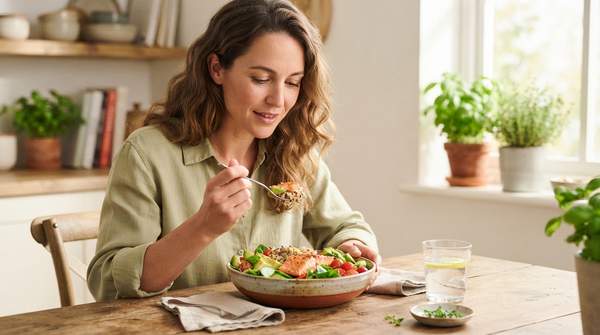
The evidence supports one clear decision: prioritize a varied, whole-food diet rich in diverse plant compounds to support the liver's natural detoxification processes, rather than relying on high-dose single-nutrient supplements. Your liver's detoxification system is ongoing—not something a short-term intervention can complete—so the sustainable pattern matters more than any individual food.
A practical way to track this: observe consistent consumption of cruciferous vegetables, berries, and other plant-rich foods as part of a balanced diet. If onions, berries, and a rotating variety of other plants appear in your meals week after week, you are supplying the flavonoids, ellagic acid, and complementary compounds that the research links to balanced Phase I and Phase II activity. That consistency—not a bottle or a week of restriction—is what the mechanistic evidence rewards.