Bioactive compounds are the plant chemicals that give "superfoods" their reputation: they are components in food that go beyond basic nutrition and interact with the body's own regulatory systems. Scientific reviews classify the major ones into a handful of families—chiefly polyphenols, carotenoids, and other nitrogen-containing compounds such as glucosinolates—each acting through mechanisms like antioxidant defense, anti-inflammatory signaling, gut microbiota modulation, and enzyme inhibition. Understanding which classes live in which foods is the practical key to building a genuinely diverse, health-supporting diet.
Understanding Bioactive Compounds: Nature's Health Boosters
Bioactive compounds are constituents that "exhibit a useful biological activity or exert a positive influence on human health and body functions, regardless of their nutritive importance," as one review of plant-derived components puts it. In other words, they are not vitamins or minerals, and they are not counted as macronutrients—yet they actively shape how our bodies function.
A review of functional foods notes that these compounds occur naturally in a variety of plant and animal sources and include polyphenols, carotenoids, omega-3 fatty acids, probiotics, prebiotics, alkaloids, and terpenoids. In the plant world, the majority of so-called bioactive compounds are phenolic compounds and their relatives—terpenoids (including carotenoids and phytosterols), polyphenols, alkaloids, and glucosinolates—found in vegetables, fruits, grains, spices, and derived foods and beverages such as tea, olive oil, fruit juices, wine, chocolate, and beer.
Many of these are secondary metabolites: chemicals plants synthesize under both normal and stress conditions, often to defend themselves. The pigments, bitter notes, and astringent flavors that plants produce for their own survival are precisely what humans inherit when we eat them. Bioactive peptides are a further class—specific amino acid sequences locked inside plant proteins that can be released by fermentation, digestion, or food processing, and which have been reported in legumes in connection with chronic-disorder prevention.
Key Mechanisms: How Bioactive Compounds Work
The health effects of these compounds are not mystical; reviews describe a consistent set of mechanisms. Antioxidant activity is the most cited: the compounds help counter the oxidative stress that contributes to chronic disease. Anti-inflammatory responses are a close second, dampening the low-grade inflammation implicated in conditions ranging from cardiovascular disorders to type 2 diabetes.
Two further mechanisms are less famous but increasingly central to the science. Modulation of gut microbiota means that some compounds act as substrates for the microbes in our colon, which metabolize them into smaller, absorbable products. The Linus Pauling Institute explains that colonic microbes break flavonoids down into phenolic acids and other aromatic compounds that are readily absorbed into the circulatory system. Finally, enzyme inhibition allows certain compounds to interfere with specific disease-related enzymes, a pathway explored in research on neurodegenerative conditions.
These mechanisms translate into measurable, if still emerging, outcomes. Small randomized controlled trials suggest that flavonoid-rich foods and beverages containing anthocyanins or flavan-3-ols may improve vascular endothelial function, and promising findings indicate that supplementation with these compounds may improve glycemic control in people at risk of or diagnosed with type 2 diabetes. The same institute cautions, however, that it is not yet known whether such acute improvements translate into long-term reductions in cardiovascular disease risk.
Bioactive Compounds: Your Dietary Guide
The table below classifies the major bioactive compound classes by their general mechanism of action and maps them to representative food sources, so you can see at a glance which beneficial compounds different plant foods deliver.
| Compound class | Primary mechanism/benefit | Common food sources |
|---|---|---|
| Polyphenols (including flavonoids, phenolic acids, lignans) | Antioxidant, anti-inflammatory, and anti-cancer activities, mediated through various molecular pathways; flavonoid subclasses linked in trials to improved vascular function and glycemic control | Berries (anthocyanins, flavan-3-ols), soy (isoflavones), quercetin-rich foods, tea, olive oil, wine, chocolate, colored rice, maize, wheat, and millets |
| Carotenoids (terpenoids) | Antioxidant properties and contribution to health-promoting functions | Yellow, orange, and red fruits and vegetables, whose pigments are the carotenoids themselves |
| Nitrogen-containing compounds (alkaloids, glucosinolates) | Antimicrobial, anti-inflammatory, and neuroprotective properties, varying by compound type | Vegetables, fruits, grains, and spices; specific sources vary by compound |
| Bioactive peptides | Reported to help prevent chronic disorders; research on cereals remains limited | Legumes, where peptides are released from plant proteins by fermentation, digestion, or processing |
Polyphenols deserve a closer look because they are the largest and most varied group. A dedicated review explains that researchers have discovered over 4,000 flavonoids alone, divided into subclasses including flavonols, flavones, isoflavones, flavanones, flavanols, and anthocyanins. This diversity is why berries, tea, and soy belong to the same broad family yet deliver different individual compounds.
Eating the Rainbow: Diversifying Your Diet for Health
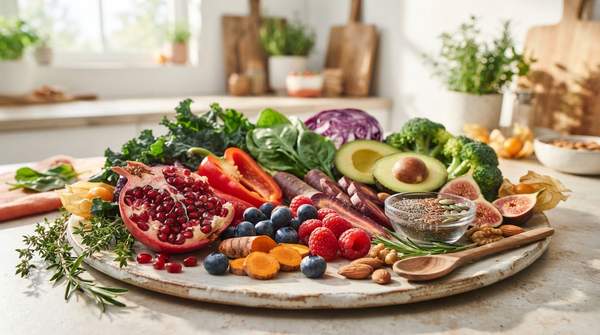
The classification above explains why dietary variety matters more than any single "superfood." Each color and category of plant food carries a different chemical signature: deep-colored grains and berries concentrate polyphenols, orange and red produce carries carotenoids, and legumes hold bioactive peptides waiting to be released by fermentation or digestion.
Whole grains illustrate the payoff of variety. A comprehensive review of plant bioactive compounds reports that colored rice, maize, wheat, and specific millets are abundant in polyphenols, tocopherols, and antioxidants, and that whole grain cereals have been associated with reduced cancer risk, improved blood pressure regulation, and enhanced glycemic control. No single grain delivers all of these; the associations come from whole-grain consumption as a pattern.
Two honest caveats belong here. First, the science describes population-level and trial-level associations, not guarantees—whether short-term improvements in vascular function produce lasting disease reduction remains an open question. Second, bioavailability matters: the presence of macronutrients in a meal influences how well co-ingested flavonoids are absorbed, and much of their activity depends on gut microbes converting them into usable metabolites. This is a general overview, not medical advice, and no specific dosages can be recommended from this evidence.
Making Informed Dietary Choices
The evidence supports one clear decision: diversify your diet by incorporating a wide variety of plant-based foods from different color groups to ensure intake of a broad spectrum of bioactive compounds. Because each compound class acts through different mechanisms—antioxidant, anti-inflammatory, microbiota-modulating, and enzyme-inhibiting—no single food can cover them all, and the flavonoid family alone spans thousands of distinct molecules.
The measurable indicator of success is simple to observe: increased consumption of diverse fruits, vegetables, whole grains, and legumes in daily meals. A practical check is whether your plate over a week includes berries or citrus, red and orange vegetables, whole and colored grains, and legumes or fermented soy. That visible variety is the most reliable way to obtain the range of bioactive compounds the science describes.
Sources
- Frontiers | Plant bioactive compounds: extraction, biological activities, immunological, nutritional aspects, food…
- MDPI
- Functional Foods Enriched With Bioactive Compounds: Therapeutic Potential and Technological Innovations - PMC
- Flavonoids — Linus Pauling Institute
- Polyphenols: From Classification to Therapeutic Potential and Bioavailability - PMC