Non-alcoholic spirits are made in one of two fundamentally different ways: producers either build flavor from botanicals without ever using alcohol, or they create a conventional alcoholic spirit first and then strip the alcohol out. As Boisson's guide to alcohol-free liquor puts it, a producer has to "either prevent the alcohol from forming during the distillation process or you have to remove it after the fact." Each pathway shapes what the final liquid can taste like, and knowing which one a bottle used tells you a great deal about what to expect in the glass.
Two Paths to Zero Proof: Understanding Non-Alcoholic Spirit Production
The first path never touches alcohol at all. Water, tea, or another non-alcoholic liquid acts as the solvent, and botanicals such as citrus peel, peppercorn, bergamot, and lemongrass are extracted directly into it. The Oregon producer Wilderton, for example, takes what the zero-proof retailer Better Rhodes describes as a "tea-like approach," intensely brewing its botanicals as an herbal tea, with water serving as the solvent rather than alcohol. Damrak's virgin expression similarly relies on botanical steam distillation and blending, using steam and water rather than alcohol.
The second path starts with a real spirit. Seedlip, according to Better Rhodes, distills each botanical—juniper, cardamom, and citrus peel—separately in alcohol, then removes the alcohol afterward through low-temperature re-distillation. Spiritless follows a comparable logic with barrel-extracted grains and re-distillation to remove the alcohol, producing a whiskey-like result. The two philosophies differ in more than mechanics: one aims for a profile that mimics an existing spirit style, while the other builds something intended to stand on its own. Some producers, like Lyre's, add natural essences and extracts to a proprietary non-alcoholic base instead—an approach that, as drinks writer Jacopo Mazzeo notes, never involves alcohol production at all.
Crafting Flavor from the Start: The Alcohol-Free Method
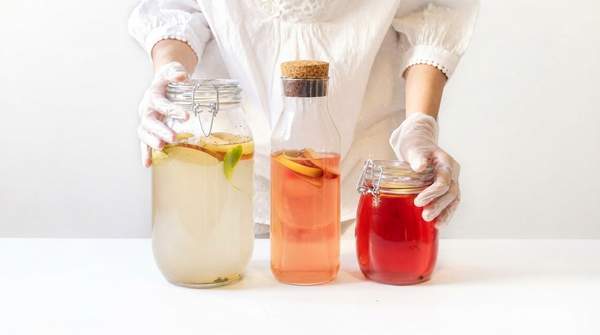
When alcohol is off the table from the beginning, producers lean on extraction techniques borrowed from tea-making and perfumery. The Bartender Company's production guide identifies three core methods: infusion, meaning soaking botanicals in water or another non-alcoholic liquid; maceration, a similar steeping process often aided by gentle heat; and distillation adapted for non-alcoholic use.
Vapor infusion offers a variation on steeping. Colleen Ford, writing for AMLI, describes heating water into vapor and passing it through a selection of natural ingredients, so the vapor picks up flavor before being cooled and condensed back into liquid. Particle size matters too: grinding or chopping hard, dense botanicals such as roots and seeds increases their surface area and makes their essential oils more accessible for extraction, as does gentle agitation during maceration, which encourages a more thorough release of flavor compounds. The liquid base here starts and stays zero-proof—flavor is added to water, never to alcohol.
Removing Alcohol: The Dealcoholization Approach
Dealcoholization reverses the sequence: a fully alcoholic spirit is produced first, and the alcohol is then separated from the flavor compounds it carried. The challenge is obvious—alcohol is an exceptional solvent and a major contributor to a spirit's aroma and mouthfeel, so pulling it out without hollowing the liquid requires precision. Techniques reported for this pathway include vacuum distillation, spinning cone columns, and reverse osmosis, which separate volatile flavor compounds from alcohol at low temperatures rather than discarding them.
Producers who choose this route are usually chasing fidelity to a specific category. Spiritless's Kentucky 74, per Better Rhodes, aims for a whiskey-like, smoky profile with a warm finish; Seedlip's expressions pursue the layered, aromatic character of gin-style botanicals. As Mazzeo observes, products made this way are designed to replace actual spirits in non-alcoholic cocktails, yet they generally cannot be labeled as the full-strength category they take inspiration from—a legal boundary that reflects how hard it is to fully reproduce an aged or distilled spirit once the alcohol is gone.
Vacuum Distillation: Preserving Delicate Aromas
Vacuum distillation is the technique that appears on both sides of the divide, and it works because of a simple physical principle: reducing air pressure lowers a liquid's boiling point. The alcohol-free producer Bel Nada reports that by reducing atmospheric pressure, distillers can extract essential oils and flavor compounds at temperatures "sometimes as low as 40°C instead of the traditional 78°C+ required for alcohol distillation," preserving delicate aromatic compounds that high-proof distillation would otherwise damage.
Dealcoholization specialists rely on the same physics. BevZero, a company that provides dealcoholization services, describes vacuum distillation as a cornerstone of the process, one that avoids the high temperatures that can alter or destroy delicate flavor components while eliminating alcohol content. Evidence from the beer world, reported by IMPOSSIBREW's guide to vacuum distillation, shows evaporation occurring at around 40°C rather than the usual 78.3°C, with some volatile aroma compounds inevitably lost and advanced systems incorporating aroma-recovery techniques to restore them. The trade-off is real: the equipment demands advanced systems and skilled operation. But the low-temperature window also gives producers creative freedom—Lucie Vodrazkova, writing for Vinsight, notes that fine control over pressure, temperature, and duration lets distillers work with flowers, tea, and delicate botanicals "that wouldn't survive a traditional run."
Layering and Balancing for Complexity
Extraction is only half the craft. Once flavors have been pulled from the botanicals, the resulting extracts are blended according to a specific recipe—a stage The Bartender Company's guide says requires a skilled hand to balance the different flavors into something complex and enjoyable. Seedlip's method of distilling each botanical separately is itself a layering strategy: isolating juniper, cardamom, and citrus peel individually, then recombining them, aims for a result that tastes "complex and real, not synthetic."
Complexity can also be architectural, built in from the raw materials. Working on the non-alcoholic agave spirit Almave, distiller Giersiepen broke the aromas of agave spirits down by where they develop during production: primary aromas from the raw material itself, including characteristic botanical and fruity compounds; then a second layer from processing, where roasting agave hearts in brick ovens, autoclaves, or earth pits creates further character—and, in the case of mezcal, introduces smoky notes. Mapping those aroma origins lets a producer decide which layers to capture without alcohol and which to reconstruct.
Comparing Non-Alcoholic Spirit Production Pathways
The table below contrasts the two philosophies side by side, showing their starting points, signature techniques, and flavor goals. Use it to identify which pathway a given bottle likely followed.
| Dimension | Alcohol-Free from the Start | Alcohol Removed |
|---|---|---|
| Production philosophy | Flavors built from botanicals in non-alcoholic liquids, with alcohol never introduced | An alcoholic spirit is created first, then the alcohol is precisely removed |
| Starting ingredients | Water or tea as the base, plus fruits, spices, and herbs—the base is zero-proof before flavoring | A fully alcoholic spirit, later separated from its flavor compounds |
| Key techniques | Maceration (steeping), infusion (often with gentle heat or vapor), and low-temperature distillation for delicate aromas | Dealcoholization via vacuum distillation, spinning cone columns, or reverse osmosis at low temperatures |
| Flavor profile goal | Unique, complex profiles that stand on their own rather than mimicking an alcoholic counterpart | Close reproduction of a specific spirit style's aroma and character after alcohol removal |
| Reported examples | Wilderton (herbal tea concentration plus vacuum distillation); Damrak Virgin 0.0 (steam distillation) | Seedlip (alcohol distillation, then low-temp re-distillation); Spiritless Kentucky 74 (barrel extraction, then re-distillation) |
The practical value of the comparison is identification: a bottle built on tea concentrates and botanical brewing follows the first column, while one described as re-distilled or dealcoholized follows the second. Neither path is inherently superior—the first trades fidelity for originality, and the second trades some aromatic loss for authenticity to a familiar category.
Choosing Your Non-Alcoholic Spirit: Understanding the Craft
When selecting a non-alcoholic spirit, consider whether its production method aligns with your preference for a flavor profile built from scratch or one that mimics a traditional spirit after dealcoholization. If you want something that tastes recognizably like gin or whiskey, look for producers who made an alcoholic base and removed the alcohol; if you're open to something that behaves like a spirit but tastes like nothing you've had before, the alcohol-free-from-the-start camp rewards that curiosity.
The quickest way to tell them apart: check the product's label or description for whether it explicitly states "alcohol-free from the start" or details a dealcoholization process like "vacuum distilled" or "alcohol removed." That single line of labeling is your measurable indicator of which of the two pathways—and which flavor philosophy—sits in the bottle.
Sources
- What are Non-Alcoholic Spirits: A Complete Guide to Alcohol-Free Liquor — Boisson
- The Zero-Proof Secret: How to Distill Non-Alcoholic Spirits That Taste Real — Better Rhodes
- The engineering of non-alcoholic spirits — Wsetglobal
- Non Alcoholic Distilled Spirits: A Guide - The Bartender Company
- How Non-Alcoholic Spirits Are Made — AMLI Residential
- The Science of Flavor: How Alcohol-Free Spirits Are Made — Bel Nada
- Ultimate Guide to Vacuum Distillation for Non-Alcoholic Beer — IMPOSSIBREW®
- The Cool Revolution: How Vacuum Distillation is Redefining Modern Spirits Production - Vinsight