Flavor and Wellness
FoodDrinksWellnessNutritionRecipesHealthy Living
Flavor and Wellness

Nourishing Body and Mind Through Food & Lifestyle

FoodDrinksWellnessNutritionRecipesHealthy Living
WritersContactPrivacyTerms
NutritionWellnessHealthDietHealthy EatingCocktailsFlavor And WellnessFood Science

© 2026 Flavor and Wellness. All rights reserved.

  1. Home
  2. /Nutrition
  3. /Nutrient profiling models may limit consumer choice, despite good intentions.
Nutrition

Nutrient profiling models may limit consumer choice, despite good intentions.

In a supermarket aisle, a traditional artisanal cheese, rich in beneficial fats and probiotics, might carry the same 'red light' warning as a highly processed sugary snack, simply because both exceed

RP
Ryan Patel

July 14, 2026 · 5 min read

A supermarket shelf displaying artisanal cheese and processed snacks, with a red warning label causing consumer confusion about healthy choices.

In a supermarket aisle, a traditional artisanal cheese, rich in beneficial fats and probiotics, might carry the same 'red light' warning as a highly processed sugary snack, simply because both exceed a single fat threshold. Such simplistic classification frequently overlooks the cheese's complex nutritional profile and its vital role in diverse diets, reducing it to a single, often misleading, metric. This labeling can significantly influence consumer perception, potentially steering them away from genuinely wholesome options.

Nutrient profiling models aim to empower consumers with clear information to make healthier choices. Yet, they often oversimplify nutrition, leading to food misclassification and potentially narrowing dietary diversity. This inherent conflict presents a critical challenge for public health initiatives in 2026.

Based on the current trajectory, without significant reform, these models risk eroding consumer trust in nutritional guidance and inadvertently promoting a homogenized, rather than genuinely healthy, global diet.

Over 70 countries currently employ some form of nutrient profiling model for front-of-pack labeling or marketing regulations, according to a WHO Report 2022. This widespread adoption suggests a global commitment to public health. However, a survey of dietitians revealed that 60% believe these models, while useful, oversimplify complex nutritional science for the average consumer, according to a Registered Dietitian Poll (2023). The disparity highlights a fundamental disconnect between policy implementation and expert perception of efficacy.

The Unintended Consequences of Simplification

In 2023, a study found that 45% of consumers perceive foods with 'red' labels as inherently unhealthy, regardless of portion size or overall dietary context, according to a Nutritional Psychology Journal 2023. Such a rigid interpretation often leads consumers to avoid nutrient-dense whole foods, like avocados or olive oil, which some models inadvertently penalize due to their fat content, despite these fats being beneficial, according to Lipid Research Quarterly (2021).

The NOVA classification system, widely used, categorizes minimally processed foods like plain yogurt or whole-grain bread as less healthy than some highly processed items due to specific ingredient thresholds, according to Food Policy Review (2021). This often favors highly processed, 'fortified' alternatives, creating a misleading perception of health.
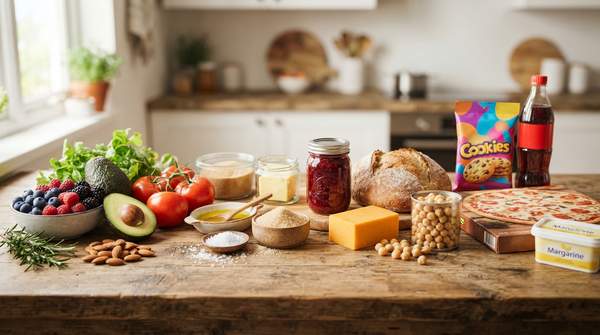

Food manufacturers report an average 15% drop in sales for products receiving unfavorable nutrient profile scores, according to Industry Trade Group Survey (2023). This economic pressure leads to reformulation efforts that sometimes prioritize 'score' over holistic nutritional value, distorting the food landscape.

This reductionist approach not only misleads consumers but also incentivizes manufacturers to optimize for scores rather than genuine nutritional quality. Companies relying on simplified nutrient profiling to market 'healthy' products are inadvertently contributing to a broader dietary homogenization, risking a future where cultural food heritage is sacrificed for arbitrary health scores.

The Public Health Imperative

Public health officials advocate for nutrient profiling models as a cost-effective tool to combat rising rates of obesity and diet-related diseases, according to CDC Statement (2022). These models offer a simplified communication tool to guide consumers towards healthier choices.

Early adoption of front-of-pack labels in Chile led to a 25% reduction in sugary drink purchases among adolescents, according to Journal of Public Health Nutrition (2019). The outcome confirms the models' capacity to measurably shift consumer behavior towards healthier options.

Consumer understanding of 'healthy' food labels varies significantly across socioeconomic groups, with lower-income individuals often relying more heavily on simplified labels, according to Sociology of Nutrition Study (2022). The reliance of lower-income individuals on simplified labels underscores the models' utility for vulnerable populations who may lack the resources or time for extensive nutritional research.

While these models offer a vital tool for public health, especially for vulnerable populations, their flaws remain. Policymakers who champion traffic-light labeling without considering the holistic nutritional value and cultural significance of foods are actively disempowering consumers from making truly informed choices, fostering a superficial understanding of nutrition rather than genuine dietary literacy.

Beyond the Numbers: The Complexity of Nutrition and Culture

Critics argue that current models often fail to account for the bioavailability of nutrients or the synergistic effects of whole foods, focusing instead on isolated components like sugar, salt, and fat, according to Dietetics Today (2022). Such a narrow focus misses the complex interactions of nutrients within whole foods.

Cultural food staples, such as traditional cheeses or cured meats, often receive poor nutrient profile scores despite their historical and cultural significance and moderate consumption patterns, according to the Anthropology of Food Journal (2023). By negatively labeling these foods, models inadvertently push consumers towards a homogenized, often Westernized, diet, undermining cultural food heritage.

The development of nutrient profiling models often involves expert panels, but the weighting of different nutrients can be subjective and influenced by prevailing dietary guidelines, according to the Food Science Review (2020). This inherent subjectivity challenges the objectivity and universal applicability of the scores.

The challenge lies in translating the multifaceted, context-dependent science of nutrition and diverse cultural eating patterns into universally applicable, simplistic metrics. The current trajectory of nutrient profiling suggests a looming crisis where the pursuit of 'health' through reductionist metrics will paradoxically lead to a less resilient and less diverse global food system, disadvantaging small producers and culturally rich diets.

Towards a More Ethical and Holistic Approach

There's a growing call for 'hybrid' nutrient profiling models that incorporate not just individual nutrient thresholds but also food processing levels and dietary patterns, according to the Future of Food Policy Report (2024). Such models promise a more nuanced evaluation of food products.

Calls for greater transparency in the algorithms and data used to create nutrient profiling models are increasing among consumer advocacy groups, according to the Consumer Watchdog Report (2023). Greater transparency in the algorithms and data used to create nutrient profiling models could build greater trust and allow for public scrutiny of model methodologies.

A proposed 'holistic dietary pattern' scoring system aims to evaluate foods within the context of a typical meal or diet, rather than in isolation, according to the Global Nutrition Initiative (2024). A proposed 'holistic dietary pattern' scoring system could more accurately reflect the actual impact of food choices on overall health.

Embracing these more sophisticated approaches is not merely an academic exercise; it is essential for fostering a food environment that truly supports public health without sacrificing dietary diversity or cultural heritage.

By 2026, major food corporations like Nestlé, which often reformulate products to achieve favorable scores, will face increasing pressure to adopt these more nuanced labeling systems, or risk alienating a segment of consumers seeking authentic nutritional guidance.

Related Coverage from Nutrition

  • What is AI in Precision Nutrition and Why Does It Matter?

Tags

NutritionFood LabelingConsumer ChoiceHealthDietFood Science
RP

Ryan Patel

Nutrition Writer

Ryan focuses on nutrition science and healthy eating, providing clear and evidence-based insights to help readers make informed food choices.

More from Nutrition

A close-up of a cooked egg next to a vibrant red bell pepper half, highlighting their nutritional pairing.

Unlock Egg's Full Nutrition with These Top Pairing Foods

A recent study revealed that pairing eggs with just half a bell pepper can boost the absorption of lutein and zeaxanthin by over 40%, significantly enhancing eye health benefits, according to ScienceD

Ryan Patel· Jul 12
A diverse group of students enjoying meals in a modern school cafeteria, with subtle visual elements indicating optimized, healthy, and sustainable food choices.

Optimized Dietary Strategies for Health

Mathematically optimized school menus achieved a 30.

Ryan Patel· Jul 11
A diverse group of patients and healthcare professionals enjoying healthy and appealing meals in a bright, modern hospital cafeteria.

HHS and CMS Launch Pledge to Make Hospital Food Healthier

Nicklaus Children's Hospital recently signed a first-of-its-kind pledge, formalizing its commitment to advancing nutrition through a direct partnership with federal health agencies, according to hhs .

Ryan Patel· Jul 11
A person examining a snack food label with a magnifying glass, symbolizing confusion and the need to scrutinize nutritional information.

Navigating Inaccurate Food Labels for Dietary Choices

The average U.S. snack food contains 4.3% more metabolizable calories than its label claims, a discrepancy largely driven by inaccurate carbohydrate counts and serving sizes, according to research pub

Ryan Patel· Jul 10

Trending Now

1
A dynamic visual merging fresh tomatoes, a smartphone displaying a cooking show, and elements of both a professional kitchen and a social media interface.

TikTok LIVE and Food Network Launch New 'Tomato Season' Cooking Series

Trends· 9 views
2
The Ultimate Guide to Finding Your Purpose in a Filtered World by Jonathan "Smilin J" Walker

The Ultimate Guide to Finding Your Purpose in a Filtered World by Jonathan "Smilin J" Walker

Wellness· 6 views
3
Why Medical Anxiety Sufferers Keep Coming Back to Comfort-in: 5 Reasons

Why Medical Anxiety Sufferers Keep Coming Back to Comfort-in: 5 Reasons

Wellness· 3 views
4
Assortment of colorful and refreshing summer drinks with fresh garnishes on a rustic table, perfect for beating the heat.

10 Best Refreshing Summer Drinks to Beat the Heat in 2026

Drinks· 5 views
5
Close-up of freshly baked rustic rye bread loaves on a wooden table, with rye grains and flour, showcasing its dense crumb and earthy texture.

A Guide to Rye Flour in Baking: Nutritional Profile and Uses

Recipes· 3 views
6
A visually striking image of glowing functional ingredients like electrolytes, probiotics, and adaptogens in a futuristic lab, symbolizing innovation in healthy beverages for 2026.

Top 5 Functional Ingredients Dominating Healthy Beverages in 2026

Trends· 4 views