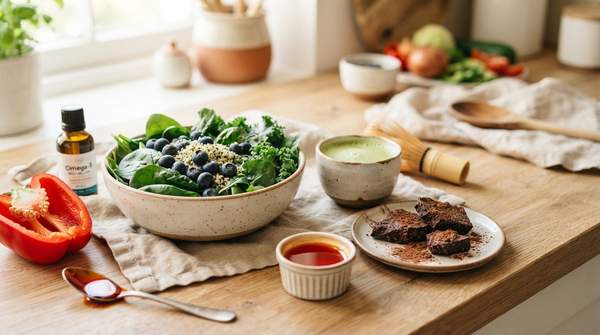
If you want your diet to work for your skin, four foods stand out in the scientific literature: astaxanthin from marine life, green tea, dark leafy greens, and high-flavanol dark chocolate. Each owes its reputation to a specific bioactive compound, and each works through a distinct mechanism—scavenging free radicals, calming inflammation, or shielding skin from ultraviolet damage. Here is what the evidence says about why they work, and what benefits you can reasonably expect.
The Science of Skin Protection: Antioxidants and Anti-Inflammatories
Two biological processes explain most of the diet–skin connection in the research. The first is antioxidant defense: ultraviolet light drives the formation of reactive oxygen species in skin, and those molecules can negatively alter the skin's signaling pathways. Compounds that inhibit or scavenge these free radicals—carotenoids, polyphenols, flavanols—interrupt that damage before it accumulates. A review of nutritional dermatology notes that astaxanthin's protective effect may work precisely this way, by inhibiting the formation of reactive oxygen species and increasing the expression of enzymes that respond to oxidative damage.
The second process is anti-inflammatory action. Inflammation accelerates the visible breakdown of skin structure, and several of the foods below are valued in the literature for calming it. Together, these two mechanisms—antioxidant protection and inflammation reduction—form the common thread linking otherwise unrelated foods, from salmon-fed marine compounds to a square of dark chocolate.
Comparative Guide to Skin-Boosting Foods
The table below isolates each food's primary bioactive compound, its mechanism of action, and the resulting skin benefit, so you can match a food to a specific goal—whether that's UV protection, better hydration, or reduced inflammation. The comparison draws on a nutritional dermatology review, reporting from Piedmont Healthcare, and coverage of clinical findings on leafy greens and dark chocolate.
| Food | Key Bioactive Compound | Mechanism of Action | Primary Skin Benefit |
|---|---|---|---|
| Astaxanthin (from marine life) | Astaxanthin (carotenoid) | May inhibit reactive oxygen species and boost enzymes that respond to oxidative damage | UV protection and reduced aging of residual skin surface components |
| Green tea | Green tea polyphenols | Antioxidant and anti-inflammatory activity | Decreased wrinkling and sun damage when applied topically; drinking-tea benefits remain unsettled |
| Dark leafy greens | Lutein and zeaxanthin | Photoprotection and support of skin structure | Improved hydration, elasticity, and photoprotection, starting within two weeks |
| Dark chocolate (high-flavanol) | Flavanols | Scavenges free radicals produced in skin by UV light | Protection against sun damage, improved blood flow, increased skin density and hydration |