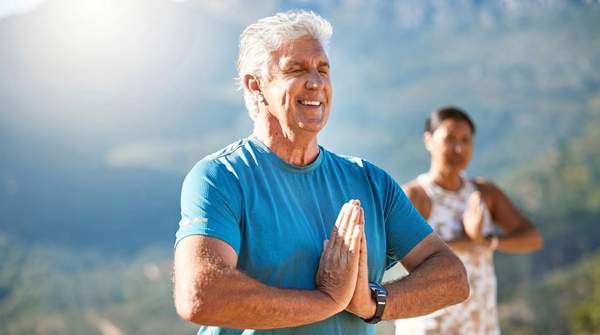
If your priority is fall prevention, the strongest specific evidence points to Tai Chi: a systematic review and meta-analysis found that Tai Chi training produced statistically significant improvements in balance performance in healthy older adults, some within 8 to 12 weeks. If flexibility paired with mental well-being is your main concern, yoga offers well-recognized benefits across both. All three practices—yoga, Tai Chi, and Pilates—belong to a family of "mindful movement" approaches that research links to better balance, flexibility, strength, and psychological well-being in later life, but they differ in emphasis, and this guide will help you match the practice to your personal health goals.
Understanding Mindful Movement for Healthy Aging
Mindful movement is a category of exercise that includes yoga, Tai Chi, qigong, and Pilates. What unites them is not the choreography but the approach: unlike conventional workouts that prioritize intensity or cardiovascular output, mindful movement emphasizes body awareness, controlled motion, and breath regulation, providing integrated benefits that support longevity and quality of life.
For older adults, the stakes are practical. Balance and postural stability are critical determinants of functional independence, and falls represent a leading cause of injury, hospitalization, and loss of autonomy in later life. Slow, deliberate movement may look simple compared with a brisk gym routine, but as one senior-living community's science overview puts it, the deliberate pace of Tai Chi and yoga encourages focus, concentration, and coordination between body and mind. Older adults who practice Tai Chi, yoga, or similar modalities consistently show improvements in postural control, gait stability, balance confidence, flexibility, and quality of life compared with non-practicing peers.
The Shared Mechanisms: How Mindful Movement Works
Why would slow, attentive movement benefit both body and brain? The research on mind-body interactions offers a coherent explanation. Interactions between brain, mind, body, and behavior can be used to promote health—enhancing well-being, mood, sleep, cognition, attention, learning, and emotion regulation, and positively impacting stress reduction and self-regulation.
Mindful movement practices such as yoga, qigong, and Tai Chi share a common foundation: the purposeful regulation of movement and coordination between the breath, mind, and body, built on mental presence and a meditative attitude. This maps onto how attention itself is trained. Mindfulness practices, researchers note, require the use of either narrowly focused attention—such as breath awareness or body scan practices—or broadly receptive attention, such as choiceless awareness or gratitude practices. In a movement class, that attention is directed at posture, alignment, and sensation in real time.
There is also a measurable physiological dimension. Mindful movement interventions have been shown to induce changes in physiological markers of stress, cognitive functions, and sensory-motor acuity, and assessments in general adult and older adult populations show positive results for quality of life, depressive symptoms, anxiety, and sleep quality. One mechanism that researchers highlight is interoceptive awareness—the ability to sense internal bodily signals. Yoga and Tai Chi have been found to improve interoceptive awareness, which is interesting in light of its known relationship with emotional regulation. The result is a single activity that trains the body and the mind together, rather than treating them separately.