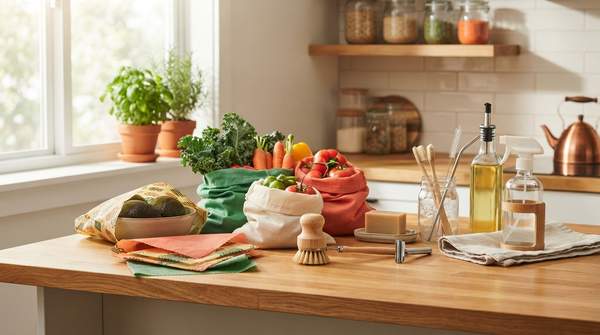
The most effective sustainable kitchen swaps are the ones that replace items you use every day: switching plastic dish soap bottles for concentrated soap bars, retiring non-stick pans for cast iron or stainless steel, composting food scraps instead of trashing them, and swapping plastic straws for reusable metal or bamboo versions. Each targets a different kind of waste and a different benefit—less plastic, fewer harmful chemicals, lower long-term cost—and the right starting point depends on which of those matters most to your household.
Why Sustainable Kitchen Swaps Matter
The kitchen earns its reputation as the highest-impact room in the house through sheer frequency of use. Because it is the most frequently used room in the home, as Amanda Runkle writes for the Me Mother Earth blog, small changes there compound daily rather than occasionally. A swap that saves one piece of packaging per day quietly removes hundreds of items from your waste stream over a year.
The scale of the problem is substantial. Writing for UF/IFAS Extension Sarasota County, Evelyn Spencer notes that total municipal solid waste generation in the U.S. reached 292.4 million tons in a single year, which was 4.9 pounds per person per day. Her framing of the opportunity is deliberately modest: switching a handful of single-use plastic home items to reusable options is less wasteful, more cost-effective over time, and reduces the use of harmful chemicals around the home. That last point matters as much as the first two, and it is worth understanding before choosing which swaps to make first.
Understanding the Health Impacts of Single-Use Plastics
Beyond waste volume, the kitchen is where plastics and food most often meet. Spencer's guidance for Sarasota County households frames chemical reduction as one of the three core benefits of moving away from single-use plastic items, alongside waste and cost. The concern is not only what goes into the trash bin but what the materials around your food may bring to it.
Cookware is the clearest example. Non-stick pans often contain chemicals that can be harmful to both your health and the environment, according to the sustainable kitchen guide from Peterman's Boards & Bowls. That is why cast iron and stainless steel are the recommended replacements: they deliver strong cooking performance without the drawbacks of non-stick coatings, and cast iron in particular can last a lifetime with proper care. It is worth noting that the sources gathered here document these risks in general terms; they do not provide specific medical advice about chemical exposure, and this article does not either.