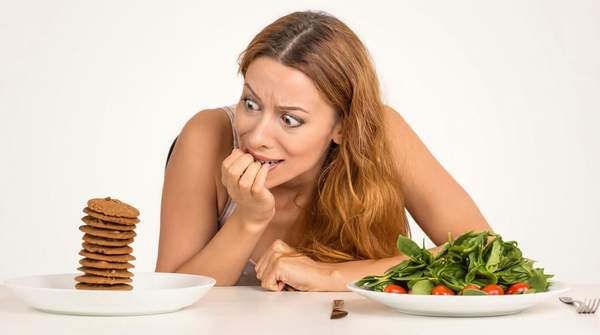
Food cravings are not a willpower failure. They are the product of hormones, brain reward circuitry, emotions, and learned associations — and each of those triggers responds to a different management technique. The most effective approach is diagnostic: figure out whether a craving is emotional, habitual, or physiological, then apply the strategy matched to that trigger rather than fighting every urge the same way.
The Science Behind Your Cravings: More Than Just Willpower
When a craving hits, it can feel like a command rather than a suggestion. That intensity has a biological basis. As researchers quoted by the American Heart Association explain, "In the case of food, our sensory systems trigger the motivational or reward pathways in the brain. You don't need to see the food per se, but people, places and things that remind you of a food that's rewarding will do it. That motivational signal will fire up our brains."
That firing is measurable. Research has shown that exposure to food-related cues can increase heart rate, gastric activity, and salivation, along with a pattern of responses in brain pathways associated with reward. In other words, the craving is a real physiological event, not a moral lapse — a framing echoed by UC San Diego's Center for Healthy Eating and Activity Research, which argues you don't have to "manage cravings" by fighting them, but can instead learn to understand and redirect them.
It's worth separating craving from something more serious. Harvard's Nutrition Source notes that a craving can also be caused by a nutritional deficiency, boredom, or self-imposed food restrictions, and that what some call "food addiction" — intense cravings plus loss of control and repeated excess consumption — remains a scientifically debated concept. This article covers ordinary cravings, not eating disorders, which warrant professional evaluation.
Biological Roots: How Your Brain and Hormones Drive Desire
Two systems pull the strings. The first is neurochemical: dopamine and serotonin, chemicals associated with pleasure and reward, can make us crave the foods that trigger them, as CHEAR's craving guide explains. The second is hormonal. Ghrelin — often called the hunger hormone — enhances appetite and increases food intake in humans, and a study published in Neuropsychopharmacology by Schmid and colleagues found that ghrelin stimulates not only appetite but the imagination of food, along with cortisol secretion, while leaving leptin, the satiety signal, unaffected.
Ghrelin also reaches beyond the stomach into the brain's reward machinery. A review in the Journal of Experimental and Basic Medical Sciences reports that ghrelin acts on mesolimbic pathways, which govern hedonic feeding and reward processing, and activates the hypothalamic-pituitary-adrenal axis, raising ACTH and cortisol levels. This is one reason stress and appetite are so entangled: the same hormonal system that flags empty energy reserves also touches the circuits that make food feel rewarding.
Notably, the tidy story that you crave chocolate because your body lacks magnesium doesn't survive scrutiny. A review of the psychology of food cravings published through PMC concludes that simple associations between nutrient deficiency and cravings "appear to account for a small fraction of food cravings at most." Most cravings are better explained by learning, emotion, and appetite signaling than by missing nutrients.